
Best Sewing Machines for Denim
Compare sewing machines for denim by piercing power, presser-foot lift, feed control, stitch length, stability, needles and handling of bulky seams.
Browse Recommended Options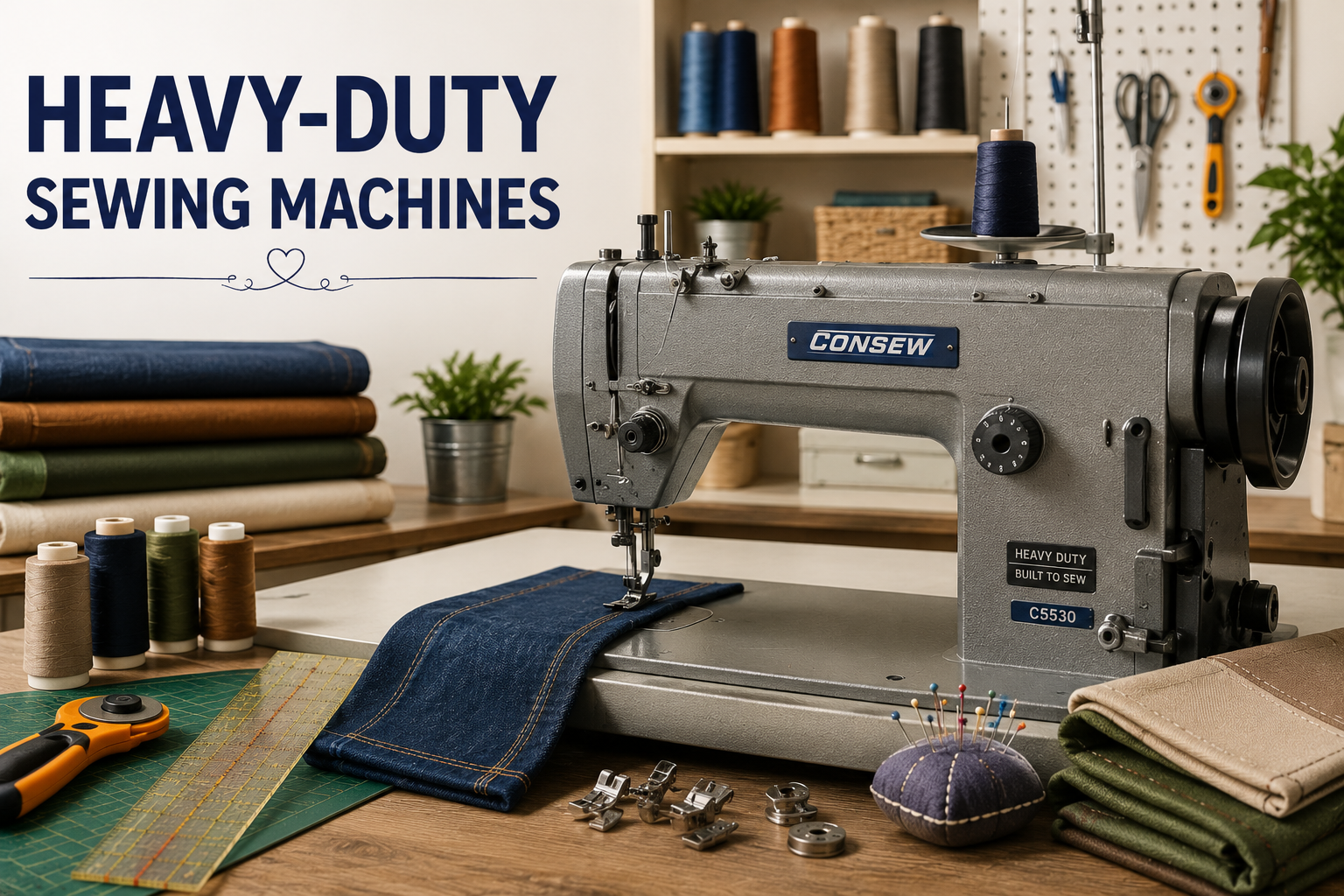
Quick Answer
For denim, look beyond motor claims. Stable feeding, a proper denim needle, longer stitch control, clearance over flat-felled seams and slow-speed control are equally important.
Editor’s Shortlist
These options represent different use cases. Confirm current model details, included accessories and suitability for your actual materials before purchasing.
SINGER Heavy Duty 4452
Fast jeans construction
Check Current OptionsJanome HD3000
Controlled denim sewing
Check Current OptionsBrother ST531HD
Multiple denim layers
Check Current OptionsBrother ST150HDH
Computerized denim work
Check Current OptionsComparison Table
| Option | Score | Best For | Key Strength |
|---|---|---|---|
| SINGER Heavy Duty 4452 | 9.8/10 | Fast jeans construction | Strong motor and included walking foot |
| Janome HD3000 | 9.6/10 | Controlled denim sewing | Stable body and presser-foot adjustment |
| Brother ST531HD | 9.4/10 | Multiple denim layers | Metal needle plate and heavy-duty needles |
| Brother ST150HDH | 9.2/10 | Computerized denim work | Speed control and walking foot |
Detailed Recommendations
SINGER Heavy Duty 4452
SINGER Heavy Duty 4452 is included because it represents fast jeans construction. Its defining advantage is strong motor and included walking foot, but buyers should still confirm current specifications and match the machine to total seam thickness and expected workload.
Fast jeans construction
Strong motor and included walking foot
Jeans hems
Verify current terms
- Clear category fit
- Practical feature set
- Useful for its intended workload
- Supported by established manufacturer documentation
- Not ideal for every fabric or project
- Current accessories and availability may vary
Shortlist this option when fast jeans construction is your primary goal and its limitations align with your workspace and project volume.
Janome HD3000
Janome HD3000 is included because it represents controlled denim sewing. Its defining advantage is stable body and presser-foot adjustment, but buyers should still confirm current specifications and match the machine to total seam thickness and expected workload.
Controlled denim sewing
Stable body and presser-foot adjustment
Flat-felled seams
Verify current terms
- Clear category fit
- Practical feature set
- Useful for its intended workload
- Supported by established manufacturer documentation
- Not ideal for every fabric or project
- Current accessories and availability may vary
Shortlist this option when controlled denim sewing is your primary goal and its limitations align with your workspace and project volume.
Brother ST531HD
Brother ST531HD is included because it represents multiple denim layers. Its defining advantage is metal needle plate and heavy-duty needles, but buyers should still confirm current specifications and match the machine to total seam thickness and expected workload.
Multiple denim layers
Metal needle plate and heavy-duty needles
Denim bags
Verify current terms
- Clear category fit
- Practical feature set
- Useful for its intended workload
- Supported by established manufacturer documentation
- Not ideal for every fabric or project
- Current accessories and availability may vary
Shortlist this option when multiple denim layers is your primary goal and its limitations align with your workspace and project volume.
Brother ST150HDH
Brother ST150HDH is included because it represents computerized denim work. Its defining advantage is speed control and walking foot, but buyers should still confirm current specifications and match the machine to total seam thickness and expected workload.
Computerized denim work
Speed control and walking foot
Repairs and patches
Verify current terms
- Clear category fit
- Practical feature set
- Useful for its intended workload
- Supported by established manufacturer documentation
- Not ideal for every fabric or project
- Current accessories and availability may vary
Shortlist this option when computerized denim work is your primary goal and its limitations align with your workspace and project volume.
How to Choose
Begin with the thickest seam and most demanding project you expect to sew regularly. Then compare feeding, stitch control, machine format, workspace, accessories and service support.
Jeans hems
Evaluate fabric thickness, seam intersections, feeding, needle access and workspace needs for this project type before choosing a machine.
Flat-felled seams
Evaluate fabric thickness, seam intersections, feeding, needle access and workspace needs for this project type before choosing a machine.
Denim bags
Evaluate fabric thickness, seam intersections, feeding, needle access and workspace needs for this project type before choosing a machine.
Repairs and patches
Evaluate fabric thickness, seam intersections, feeding, needle access and workspace needs for this project type before choosing a machine.
Features That Matter
Fabric Feeding
Even feeding reduces layer shift and inconsistent stitch length, especially at bulky seam intersections.
Needle and Thread Match
The correct needle system, size and thread are essential for clean penetration and safe operation.
Presser-Foot Clearance
Extra lift can help position bulky seams, but clearance alone does not prove the motor can sew the material.
Speed Control
Slow, controllable sewing is valuable when approaching thick intersections, curves or precise topstitching.
Stability
A rigid frame and suitable work surface reduce vibration and help the feed system remain consistent.
Service and Parts
Check manuals, replacement feet, needles, bobbins, dealer access and written warranty terms.
Common Buying Mistakes
- Judging by marketing labels alone: “Heavy duty” is not a standardized capacity rating.
- Ignoring seam thickness: Folded hems, webbing and piping can be far thicker than a single fabric layer.
- Using the wrong needle: An incorrect needle can bend, break, skip stitches or damage material.
- Expecting a domestic machine to replace industrial equipment: Production volume and compound feeding can change the correct machine class.
Frequently Asked Questions
Can a home sewing machine handle thick fabric?
Many can handle occasional thick seams when the total layer count, needle, thread and presser foot are appropriate. Repeated dense work may require a heavy-duty or industrial machine.
Does more motor power guarantee better results?
No. Feeding, needle choice, presser-foot pressure, stitch formation, seam thickness and operator control also affect performance.
What needle should I use for heavyweight fabric?
Use a needle type and size recommended for the specific fabric and machine. Manufacturer guidance commonly calls for a heavier home-sewing needle for heavyweight materials.
Is a walking foot the same as an industrial walking-foot machine?
No. A domestic walking-foot attachment assists top-layer feeding, while an industrial walking-foot or compound-feed machine uses a dedicated feeding mechanism.
How should I compare warranties?
Check the current written warranty, labor coverage, exclusions, authorized service requirements and whether terms differ for commercial use.
Should I buy by stitch count?
No. Reliable straight and zigzag stitches, control, feeding and useful presser feet usually matter more than a large decorative total.
Compare Current Options
Use the criteria above to narrow the field, then confirm current specifications, accessories, warranty terms and pricing.
Browse Recommended Options