
Embroidery Machine vs Sewing Machine
A sewing machine constructs and repairs fabric projects. An embroidery machine automatically stitches decorative designs inside a defined field. Some combination models do both, but the two functions solve different problems.
Browse Recommended Options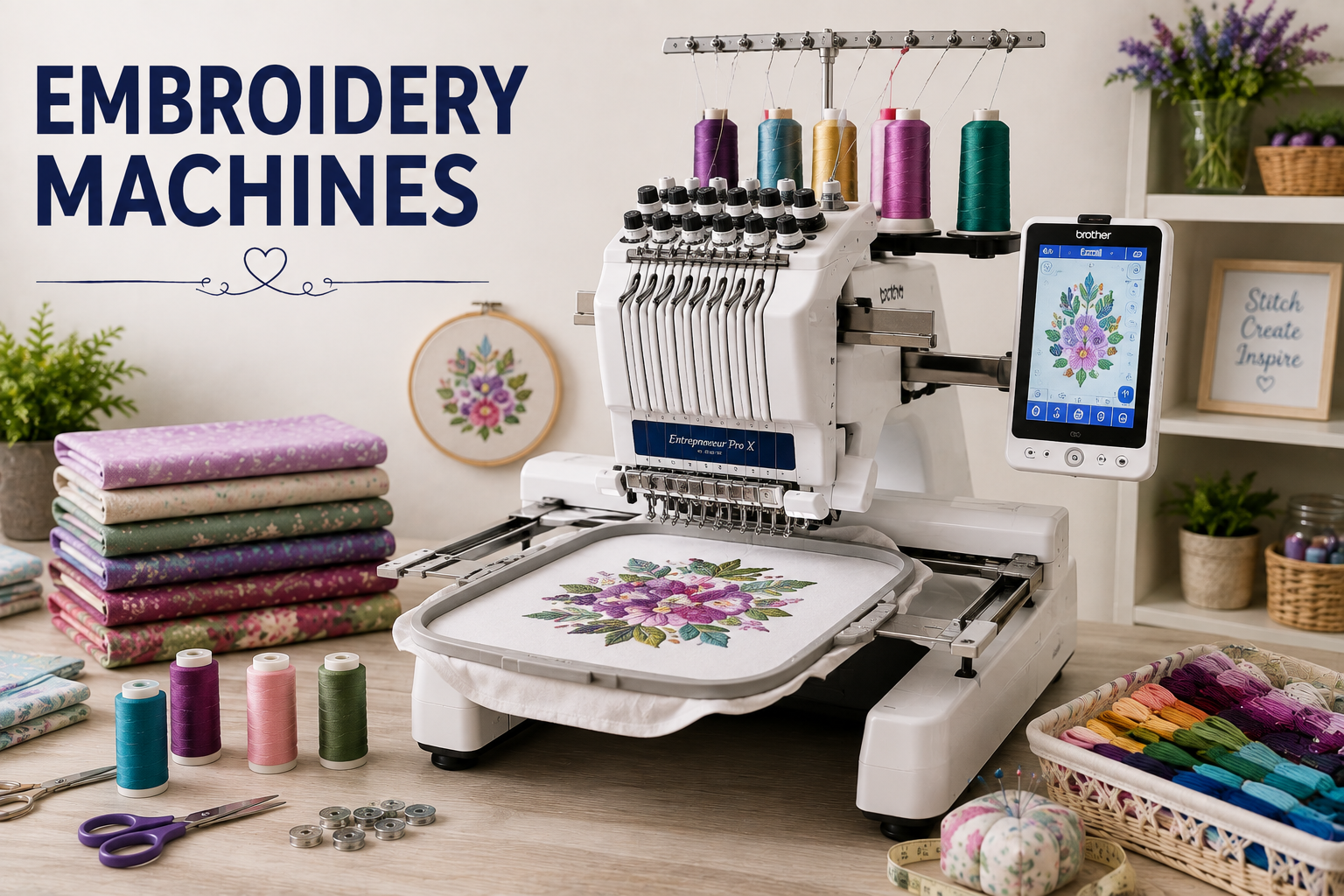
Quick Answer
Buy a sewing machine first if you want to make garments, quilts, repairs or home décor. Choose an embroidery machine when your main goal is logos, monograms and decorative stitched designs. Choose a combination machine when you need both and accept the workflow tradeoffs.
Key Differences at a Glance
Use the intended job and workflow—not the name alone—to choose the right format.
| Decision Factor | Option A | Option B |
|---|---|---|
| Primary strength | Lower entry cost, simpler home workflow or broad sewing flexibility | Greater automation, production efficiency or specialized embroidery capability |
| Best for | Beginners, hobby work and occasional projects | Frequent orders, multicolor work or specialized finished items |
| Tradeoff | More operator involvement and possible rehooping or rethreading | Higher cost, larger footprint and more specialized training |
Features That Matter Most
These factors have the greatest effect on capability, daily workflow and long-term value.
Primary purpose
Sewing machines join and shape fabric; embroidery machines reproduce digitized decorative designs.
User control
Regular sewing guides fabric under the needle, while machine embroidery moves a hoop automatically.
Stitch system
Sewing machines provide utility and decorative stitches; embroidery machines read design files composed of many programmed stitches.
Workspace
Embroidery requires hoop clearance and space for the carriage, while sewing emphasizes bed space and fabric handling.
Accessories
Sewing uses presser feet and attachments; embroidery relies on hoops, stabilizers, thread, software and positioning tools.
Best ownership path
Many users start with sewing and add embroidery later, while combination machines consolidate both functions.
How to Choose
Begin with the largest and most demanding project you realistically expect to complete. Confirm the machine's actual field, compatible accessories, file or stitch system, workspace and service options. Compare the full ownership cost, including supplies, software, training and maintenance.
Prioritize
- Compatibility with your target projects
- A workflow you can repeat confidently
- Accessible controls and clear documentation
- Parts, accessories and service support
- Capacity for realistic future growth
Avoid
- Buying only by stitch or design count
- Assuming every hoop or accessory is universal
- Ignoring workspace and loading clearance
- Using headline speed as the only performance measure
- Underestimating supplies and training costs
Care and Ownership
Follow the Manual
Use the specified needles, thread paths, oiling guidance and cleaning schedule for the exact model.
Test Before Production
Run samples with the final fabric, stabilizer, thread, design density and settings before committing to the finished item.
Protect the Workflow
Keep compatible consumables on hand, back up design files and address unusual sound, tension or stitch formation early.
Frequently Asked Questions
Can an embroidery machine sew normal seams?
Embroidery-only machines cannot. Combination sewing-and-embroidery machines can switch modes and perform regular sewing.
Can a sewing machine create embroidery?
It can make decorative stitches and free-motion designs, but it does not automatically reproduce digitized hoop embroidery like an embroidery machine.
Which machine should a beginner buy first?
A sewing machine is usually the better first purchase for construction, repairs and broad project flexibility.
What does an embroidery machine need besides thread?
Common supplies include machine embroidery thread, bobbin thread, stabilizer, hoops, suitable needles and design files.
Is a combination machine a compromise?
It can be excellent for home use, but users cannot sew and embroider simultaneously, and its embroidery workflow may be slower than a multi-needle machine.
Which machine is better for logos?
An embroidery machine is designed for repeatable digitized logos, lettering and monograms.
Compare Current Options
Use the criteria above to narrow the category, then check current models, accessories, availability and pricing.
View Recommended Options