
Sewing Equipment
Build a useful sewing setup around the machine, cutting, measuring, pressing, workspace and specialty tools your projects actually require.
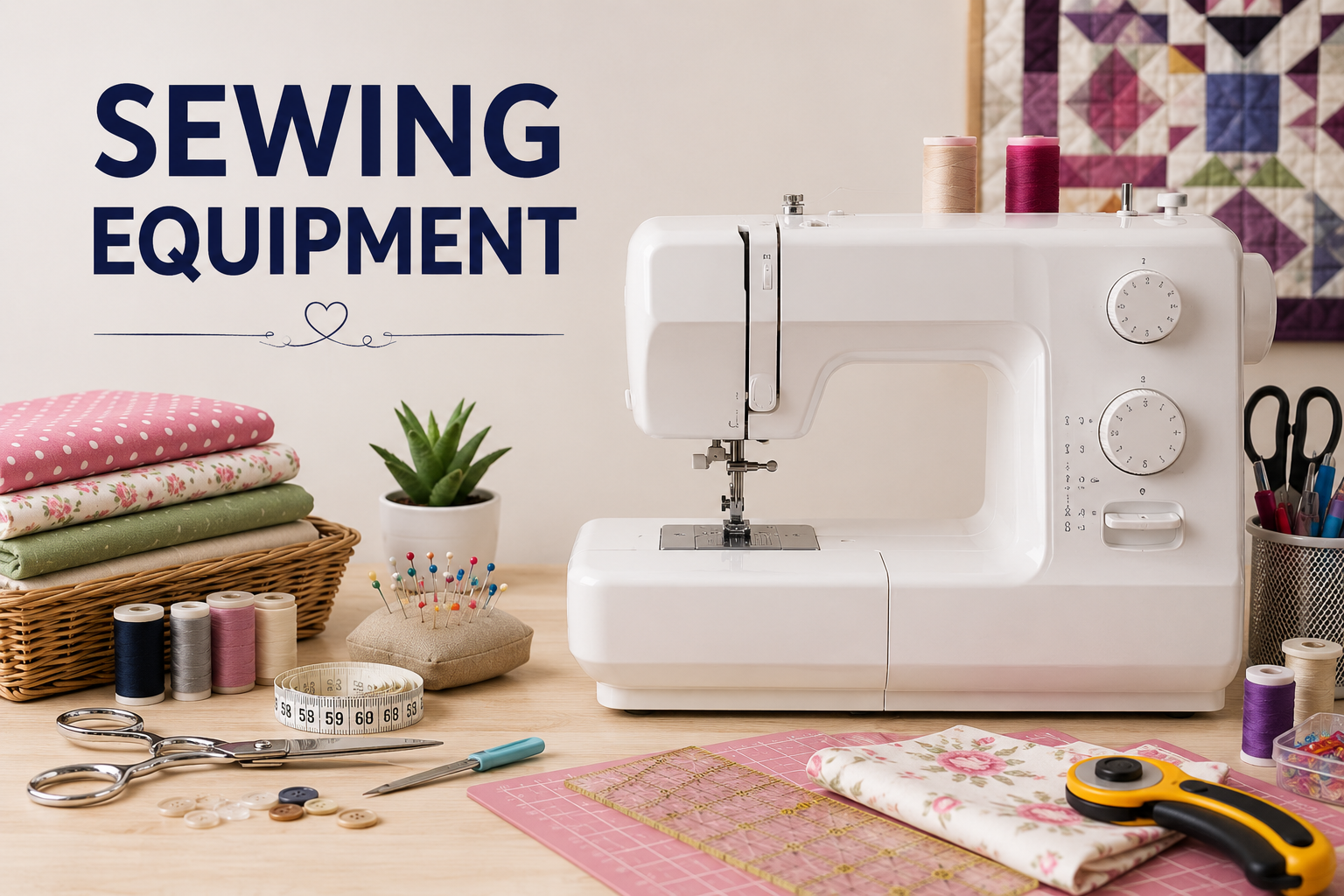
Quick answer
A dependable sewing machine is only one part of an effective setup. Accurate cutting, marking, pressing and a stable work surface influence finished results as much as decorative stitch count. Buy the core system first; add specialty equipment when repeated projects reveal a genuine bottleneck.
Core sewing equipment categories
Sewing machine
The primary construction tool. Choose it by fabric, seams, control and workspace.
Cutting system
Fabric shears, rotary cutter, mat and safe blade storage support accuracy.
Measuring and marking
Use reliable rulers, gauges and removable marking tools appropriate to the fabric.
Pressing tools
An iron, stable board and protective pressing aids shape seams during construction.
Furniture and lighting
A stable table, supportive chair and directional light reduce avoidable errors.
Specialty machines
Add a serger, coverstitch or embroidery machine only when the workflow justifies it.
Build the setup in the right order
1. Define the project range
List the fabrics, seam types, finished dimensions and frequency of use. Garments, quilts, bags and embroidery demand different workspaces and supporting tools.
2. Choose the core machine
Prioritize control, feeding, buttonholes, free-arm access and support. Avoid spending the entire budget on functions unrelated to the intended work.
3. Complete cutting and pressing
Clean cutting and deliberate pressing improve accuracy before another specialty machine does. Include replacement blades, suitable needles and safe storage.
4. Add specialty capacity
A serger, coverstitch, embroidery or industrial machine should solve a recurring limitation—not merely expand the equipment list.
Budget for the complete workflow
The machine often receives the most attention, but a usable budget also includes needles matched to fabric, correct bobbins, reliable thread, cutting tools, marking tools, pressing equipment and a stable surface. A less expensive machine on a solid table with sharp cutting tools can produce more consistent work than a premium machine paired with unstable furniture and worn consumables.
Protect part of the budget for maintenance and replacement items. Needles are consumable; rotary blades dull; mats scar; irons accumulate residue; lights and chairs affect comfort. Buying everything at once is rarely necessary. Start with the tools required by the next several projects and expand after the workflow reveals repeated friction.
Compatibility and safety checks
Needles, bobbins and feet
Use the exact needle system and bobbin class specified in the manual. Confirm shank style and model compatibility before purchasing presser feet, walking feet or specialty attachments.
Cutting tools
Store shears and rotary cutters safely, retract blades when possible and replace damaged mats. A cutting tool should be controlled and sharp, not forced through fabric.
Electrical equipment
Check voltage, cord condition, ventilation and manufacturer cleaning instructions. Unplug a machine or iron before applicable maintenance and never improvise internal service.
Workspace ergonomics
Keep the machine stable, the fabric supported and controls reachable. Good lighting and a suitable chair reduce strain and make stitch or cutting errors easier to see.
How we evaluate sewing equipment
We connect documented construction, compatibility, dimensions and safety information to realistic sewing tasks. Recommendations favor tools that solve repeated problems, remain serviceable and fit the available workspace.
Frequently asked questions
What equipment does a beginner need to start sewing?
Focus on the exact sewing equipment tasks you will repeat, then compare control, fabric handling, workspace, accessories and support. Manufacturer specifications establish capability, but realistic project limits and correct setup determine whether the machine is a good fit.
Should the sewing machine be the largest part of the budget?
Focus on the exact sewing equipment tasks you will repeat, then compare control, fabric handling, workspace, accessories and support. Manufacturer specifications establish capability, but realistic project limits and correct setup determine whether the machine is a good fit.
Which cutting tools are essential?
Focus on the exact sewing equipment tasks you will repeat, then compare control, fabric handling, workspace, accessories and support. Manufacturer specifications establish capability, but realistic project limits and correct setup determine whether the machine is a good fit.
Is a serger required for garment sewing?
A serger is optional. A regular sewing machine constructs garments and handles buttonholes, zippers and topstitching. A serger speeds edge finishing and stretch seams, so it is usually a second machine rather than the first purchase.
What makes a sewing table safe and stable?
Focus on the exact sewing equipment tasks you will repeat, then compare control, fabric handling, workspace, accessories and support. Manufacturer specifications establish capability, but realistic project limits and correct setup determine whether the machine is a good fit.
How often should needles and rotary blades be replaced?
Match the needle system, point style and size to the fabric and thread. Universal needles suit many woven fabrics, while ballpoint or stretch needles help knits and denim needles help dense woven layers. Replace dull or damaged needles promptly.
Which pressing equipment matters most?
Focus on the exact sewing equipment tasks you will repeat, then compare control, fabric handling, workspace, accessories and support. Manufacturer specifications establish capability, but realistic project limits and correct setup determine whether the machine is a good fit.
How should sewing tools be stored?
Focus on the exact sewing equipment tasks you will repeat, then compare control, fabric handling, workspace, accessories and support. Manufacturer specifications establish capability, but realistic project limits and correct setup determine whether the machine is a good fit.