
bernette B64 Airlock Review
A specification-based assessment of threading, stitch formation, project fit and practical limitations.
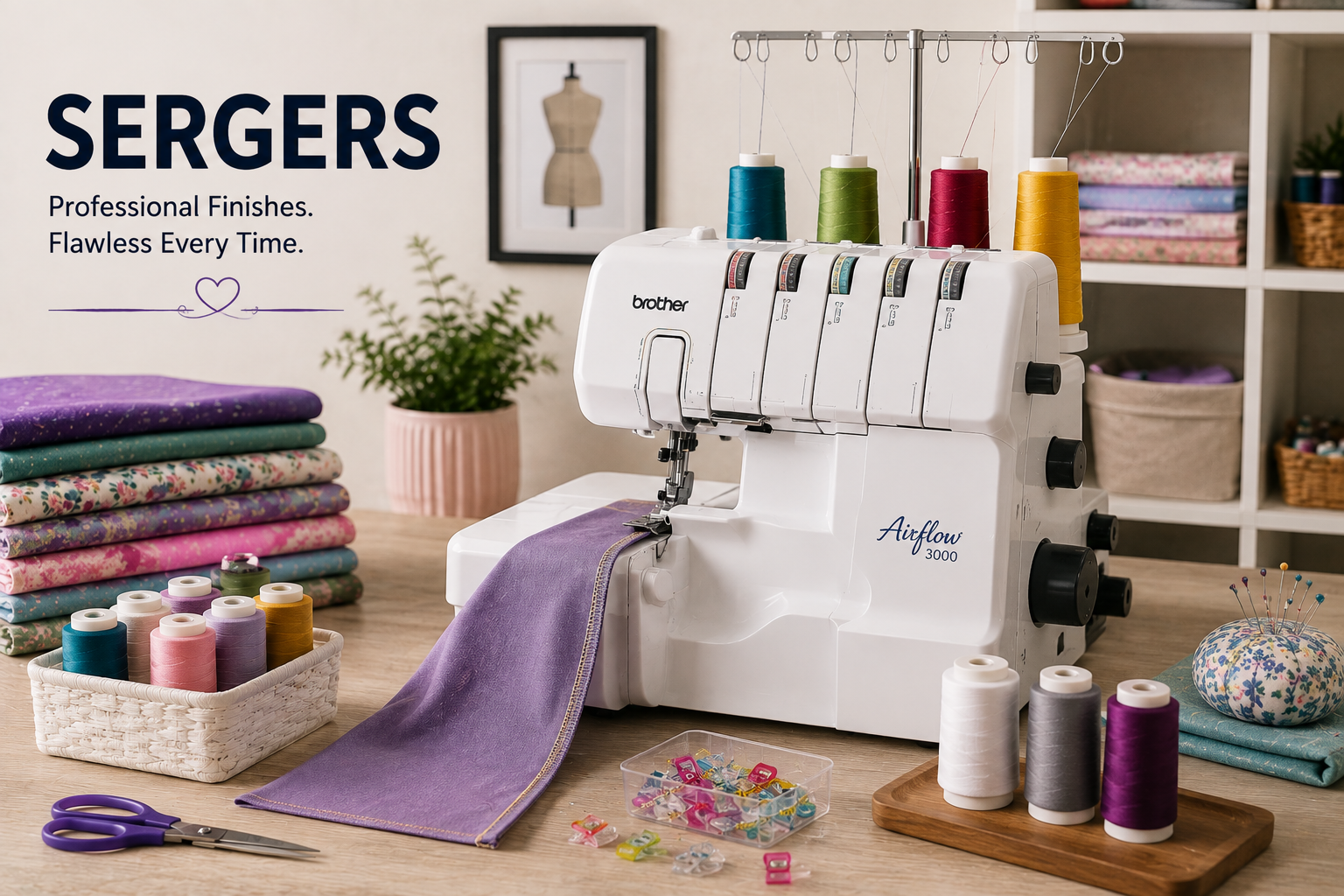
Bottom line
The Bernette b64 AIRLOCK is a air-threading overlock serger best aligned with serious garment makers who want efficient threading and controlled edge finishing. Its relevant strengths are automatic air threading, a free-arm format and generous working space for a serger. It should not be mistaken for equipment intended for coverstitch hems, straight-stitch construction or low-cost occasional use.
Check Current PriceWhat matters about the Bernette b64 AIRLOCK
| Machine class | air-threading overlock serger |
|---|---|
| Core strengths | automatic air threading, a free-arm format and generous working space for a serger |
| Best fit | serious garment makers who want efficient threading and controlled edge finishing |
| Not designed for | coverstitch hems, straight-stitch construction or low-cost occasional use |
| Purchase check | Exact thread capability, included feet, voltage, warranty, seller and return terms |
Threading and setup
A serger’s value depends on repeatable setup, not merely the number of stitch configurations on the box. Follow the documented threading order, raise the presser foot when required so the tension system can accept thread correctly, seat every thread in its guide and test on a doubled scrap from the actual project. When a stitch fails, rethread completely before making large tension changes.
automatic air threading, a free-arm format and generous working space for a serger can reduce friction, but they do not remove the need to understand needles, loopers, tension, differential feed, stitch length and cutting width. Buyers moving from a conventional sewing machine should budget practice time and keep contrasting thread colors available while learning which thread controls each part of the stitch.
Stitch quality and fabric handling
Knit seams
Differential feed is central to controlling stretching and waviness. Test the real knit, stabilize difficult areas and avoid treating one setting as universal.
Woven edges
A balanced overlock can trim and finish efficiently, but seam allowance, knife position and thread choice affect the result.
Rolled hems
Fine edges require correct stitch conversion, compatible thread and careful cutting-width adjustment. Practice curves and corners first.
Bulky intersections
Multiple seam allowances can exceed a home serger’s comfortable range. Grade layers and do not force dense assemblies under the foot.
Advantages and limitations
Reasons to consider it
- automatic air threading, a free-arm format and generous working space for a serger
- Strong match for serious garment makers who want efficient threading and controlled edge finishing
- Faster trimming and edge finishing than separate multi-step methods
- Differential-feed control for varied fabrics
- Recognizable model family with documentation and accessories
Reasons to skip it
- Not intended for coverstitch hems, straight-stitch construction or low-cost occasional use
- Requires threading and tension practice
- Does not replace a regular sewing machine
- Bundle contents vary by seller
- Specialty feet and service add ownership cost
Project fit
For serious garment makers who want efficient threading and controlled edge finishing, the Bernette b64 AIRLOCK can shorten construction time and produce cleaner interior finishes. It is most defensible when serging will be frequent enough that faster edge finishing and fabric-control features solve a repeated problem. Occasional users may obtain better value from a simpler serger, while production users should evaluate duty cycle, service access and downtime separately.
Do not buy it expecting coverstitch hems, straight-stitch construction or low-cost occasional use. Coverstitch hems, buttonholes, precise topstitching and lockstitch assembly require other equipment. A good sewing-room plan treats the serger as a complementary specialist.
Ownership and pre-purchase audit
Confirm the full delivered configuration, not just the machine name. Check included feet, needles, tools, waste collector, cover, manual language and warranty coverage. Verify compatible consumables and local service. Add quality thread, replacement needles, cleaning tools and any technique-specific feet to the real ownership cost.
Before ordering, identify three recurring garments or projects and write down the required seam, edge and hem types. If those tasks repeatedly call for overlocking, the machine has a defensible role. If they mainly require conventional straight stitch or coverstitch, change equipment class instead of forcing the purchase.
Real-world setup scenarios
Starting a knit garment
Begin with a full test sample that includes the same layers, seam direction and elastic recovery as the garment. Use fresh approved needles, then evaluate differential feed before changing tensions. A flat scrap can look balanced while a cross-seam stretches or tunnels, so reproduce the difficult intersection rather than testing only an easy edge.
Changing to a rolled hem
Treat the conversion as a documented setup, not an improvised tension experiment. Record working settings, follow the manual’s stitch-conversion sequence, change the designated needle and stitch-finger configuration, and test the selected decorative thread. Curves and corners require their own sample because cutting width and fabric density change the result.
Recovering from a broken thread
Stop and identify the cause before tying on new thread. Check needle condition, guide path, cone feeding, thread quality and snags around the spool stand. If stitch formation remains unstable, remove all threads and rethread in the specified order. Partial rethreading often leaves one path crossed incorrectly.
Planning the upgrade path
The next machine should solve a repeated limitation. Add coverstitch equipment when professional knit hems are frequent; consider industrial overlock equipment when sustained production and duty cycle become the constraint. Do not upgrade merely because threading takes practice. Technique problems follow the user unless a new feature directly addresses them.
Settings records and maintenance
Keep a swatch library labeled with fabric, needle, thread, differential-feed position, stitch length, cutting width and tension settings. Include a seam and edge finish on every sample. This record is more reliable than memory and helps separate a machine fault from a material or setup change.
Trimming creates lint around the knives, feed dogs and loopers. Unplug the machine before cleaning, follow the manual for safe access and never add oil unless the instructions specify where and how much. Replace damaged needles, keep pins away from the knife path and seek professional service when timing, electrical or persistent stitch-formation problems remain after correct rethreading.
How to decide whether this serger earns its space
A serger earns space when it repeatedly shortens a real construction sequence. Count how many current projects require knit seams, clean woven seam allowances, rolled hems or fast edge finishing. Then estimate how often you would rethread or convert stitches. Frequent use increases the value of accessible guides, air threading and easy differential-feed adjustments; occasional use puts more weight on price, documentation and simple storage.
Also examine the sewing room around the machine. Sergers need room for multiple thread cones, fabric entering from the left and trimmed waste exiting near the knife. Poor cone clearance or a narrow table can create feeding problems that are wrongly blamed on tension. Stable lighting and a dedicated scrap container make setup and cleanup more consistent.
Finally, distinguish creative growth from production growth. More garment variety may justify extra feet and stitch configurations. Higher paid volume may require faster service, spare capacity or industrial equipment. Those are different upgrade paths, and choosing the correct one prevents paying for home convenience features when uptime is the actual business constraint.
How this review was evaluated
The assessment uses current published documentation and evaluates machine class, threading, stitch formation, differential feed, cutting system, ergonomics, accessories, service and ownership cost. Manufacturer information is used as a non-clickable factual source; commercial buttons go only to Amazon.
Frequently asked questions
Is the Bernette b64 AIRLOCK beginner-friendly?
It can be, but sergers have a steeper threading and tension-learning curve than basic sewing machines. Its suitability improves when serious garment makers who want efficient threading and controlled edge finishing are the actual goals.
What can the Bernette b64 AIRLOCK do that a sewing machine cannot?
It can trim an edge while forming an overlock stitch, producing fast, flexible seam finishing. It does not replace a sewing machine for buttonholes, topstitching or ordinary lockstitch construction.
Does the Bernette b64 AIRLOCK make coverstitch hems?
No. A conventional overlock serger and a coverstitch machine form different stitches. coverstitch hems, straight-stitch construction or low-cost occasional use remain outside this model’s intended role.
Can the Bernette b64 AIRLOCK sew knits?
Yes, knit construction is a core use when differential feed, needles, thread and settings are matched to the fabric. Always test scraps before sewing the garment.
What should I verify before buying?
Confirm the exact model, voltage, included feet, thread capability, current warranty, return terms and seller bundle. Similar names do not guarantee identical accessories.
Is air threading worth paying for?
It can reduce looper-threading friction for frequent users, but it does not eliminate needle threading, tension judgment, cleaning or correct setup.
What is the main limitation of the Bernette b64 AIRLOCK?
It is specialized edge-finishing equipment. It cannot replace a conventional sewing machine, coverstitch machine or industrial system for tasks those machines perform.
How should I compare its value?
Compare total setup cost, threading convenience, stitch configurations, service access and how often you will serge. Unused convenience features do not create value.
Final verdict
The Bernette b64 AIRLOCK is worth comparing when serious garment makers who want efficient threading and controlled edge finishing justify its specialized workflow and automatic air threading, a free-arm format and generous working space for a serger solve a repeated setup problem.
Check Current Price