
Industrial vs Domestic Sewing Machine
A practical, research-based guide to heavy-duty construction, with the specifications, workflow limits and ownership costs that matter before buying.
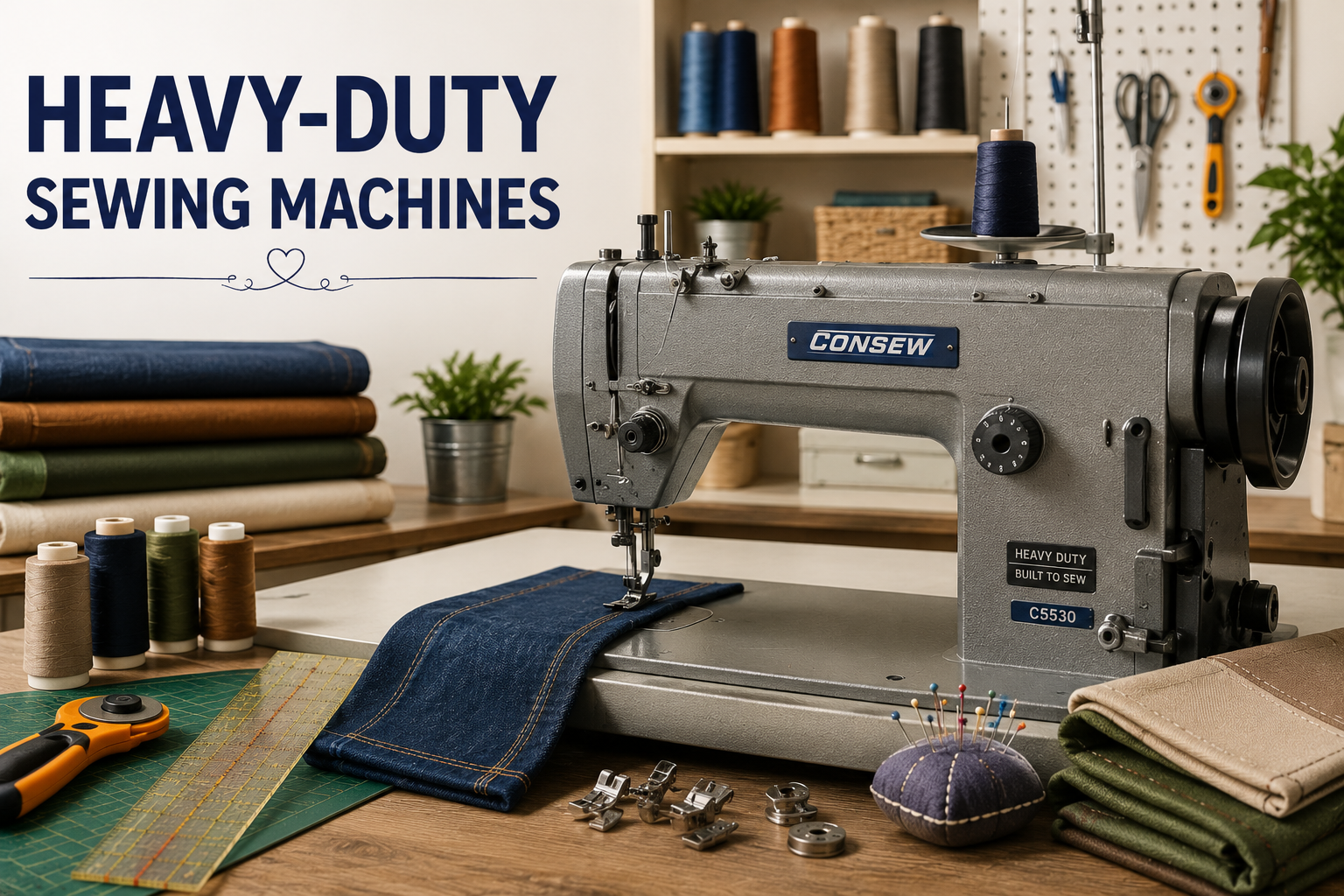
Bottom line
The best choice is the one that handles your hardest repeated task without forcing you to pay for unused capacity. For heavy-duty construction, prioritize control, compatibility and a complete working setup over marketing claims.
This guide is based on documented specifications, manuals and use-case analysis. It does not claim laboratory or hands-on testing. Models, bundles and availability can change, so verify current details before purchasing.
Best options to compare
JUKI TL-2010Q
Best for: Fast, controlled straight stitching with a large work area.
Fast, controlled straight stitching with a large work area. This recommendation is based on documented configuration and use-case fit rather than invented hands-on testing or a universal ranking.
Why consider it
- Clear role in the shortlist
- Established product family
- Useful path for the target workflow
Limitations
No single option fits every fabric, project scale or skill level.
Verify the exact current bundle and model documentation.
Consew 206RB-5
Best for: Designed for demanding upholstery, leather and layered assemblies.
Designed for demanding upholstery, leather and layered assemblies. This recommendation is based on documented configuration and use-case fit rather than invented hands-on testing or a universal ranking.
Why consider it
- Clear role in the shortlist
- Established product family
- Useful path for the target workflow
Limitations
No single option fits every fabric, project scale or skill level.
Verify the exact current bundle and model documentation.
JUKI DDL-8700
Best for: High-throughput industrial format for repeated garment seams.
High-throughput industrial format for repeated garment seams. This recommendation is based on documented configuration and use-case fit rather than invented hands-on testing or a universal ranking.
Why consider it
- Clear role in the shortlist
- Established product family
- Useful path for the target workflow
Limitations
No single option fits every fabric, project scale or skill level.
Verify the exact current bundle and model documentation.
Key buying criteria
Feed mechanism
Drop feed, needle feed and compound feed solve different jobs.
Motor and speed control
Servo motors provide more usable low-speed control.
Needle system
Industrial machines use model-specific needle systems.
Table and service
Space, assembly, lubrication and local repair support matter.
product image slot
Industrial
Best evaluated against your exact project mix, controls, accessories and ownership requirements.
product image slot
Domestic Sewing Machine
Best evaluated against your exact project mix, controls, accessories and ownership requirements.
Comparison framework
| Decision area | What to verify | Why it matters |
|---|---|---|
| Primary workflow | Hardest repeated material, seam or design | Prevents buying for an unrealistic edge case or vague future use |
| Compatibility | Needles, feet, hoops, shank type or machine class | A strong product is useless when it does not fit the existing system |
| Control | Low-speed response, visibility and adjustability | Precision and confidence matter more than maximum speed for many users |
| Ownership cost | Accessories, maintenance, storage and service | The checkout price rarely represents the complete usable setup |
Match the equipment to the real project
List the three projects you expect to complete most often during the next year. Note the thickest seam, stretchiest fabric, largest hoop or widest piece involved. Those repeated constraints should drive the purchase.
Avoid buying around a single dramatic demonstration. Machines and accessories are often shown under ideal conditions with suitable needles, thread and preparation. Your decision should account for setup time, learning curve, table support and cleanup as well as the visible result.
Test the difficult step
When possible, test the hardest operation with representative scrap material. For machines, use the actual layer stack and work slowly through transitions. For accessories, confirm fit and visibility before assuming a generic label means universal compatibility.
Budget for the complete system
Plan for appropriate needles, quality thread, the relevant presser foot or hoop, work lighting, stable support and safe storage. Specialty work may require stabilizer, interfacing, cutting tools or dedicated furniture.
A higher price is justified when it solves a repeated bottleneck, receives frequent use and has dependable support. It is poor value when added capacity sits unused or setup friction makes the equipment inconvenient.
How this guide was researched
We rebuilt this page around current manufacturer documentation, model manuals, accessory compatibility and realistic machine-class limits. Recommendations separate documented facts from editorial judgment, avoid invented ratings and do not claim hands-on testing.
Related guides
Frequently asked questions
Ready to compare the current offers?
Recheck the exact seller bundle, included accessories and return terms before ordering either model.
What matters most when choosing industrial vs. domestic sewing machines?
Start with the repeated project, materials, workspace and frequency of use. A feature is valuable only when it improves that real workflow.
How much should I spend on industrial vs. domestic sewing machines?
Budget for the full working system, not only the headline item. Include compatible accessories, needles, thread, stabilizer, storage and service.
Are industrial vs. domestic sewing machines suitable for beginners?
Yes, when setup, controls and instructions match the learner. Beginners still need correct threading, material preparation and safe operating habits.
Which specification is easiest to misunderstand?
Marketing labels and feature counts are often overweighted. Compatibility, low-speed control, usable workspace and realistic material limits usually matter more.
What accessories should be purchased at the same time?
Buy only the accessories required for the first projects: correct needles, quality thread, the relevant foot or hoop, and stable work support.
When is an upgrade justified?
Upgrade when a repeated limitation wastes time or prevents acceptable results. Do not pay for capacity that will remain unused.
How can current product claims be verified?
Check the exact manufacturer manual and current specification page, then confirm the retailer bundle, warranty, voltage and return terms.
What is the most common buying mistake?
The biggest mistake is choosing from a category label alone. Define the hardest repeated job and buy around that constraint.
Choose around the repeated work
Compare current models, bundles and sellers only after defining the materials, project size, controls and support you need.
Compare Options on AmazonManufacturer specifications and manuals are used as factual references. Purchase-intent links on this page lead to Amazon and may earn an affiliate commission.