
Fabric Cutting Machines
Independent, research-based guidance for cutting repeated shapes, appliqué, quilts and craft materials, focused on supported materials, usable cutting area, software, mat cost and repeatability.
Bottom line
Electronic cutters suit flexible digital shapes; die cutters suit fast repeatable shapes. Neither automatically replaces rotary cutting for long garment lines or large yardage. Match the workflow and ongoing consumable cost.
This guide is based on current documented configurations and project-specific analysis. It does not claim laboratory or hands-on testing. Exact bundles, availability and specifications can change, so verify the model manual before purchase.
Recommended equipment paths
Quick product comparison
These picks serve different buyer needs. Use the table for a fast shortlist, then read the individual reviews and limitations below.
| Pick | Product | Best for | Why it made the list | |
|---|---|---|---|---|
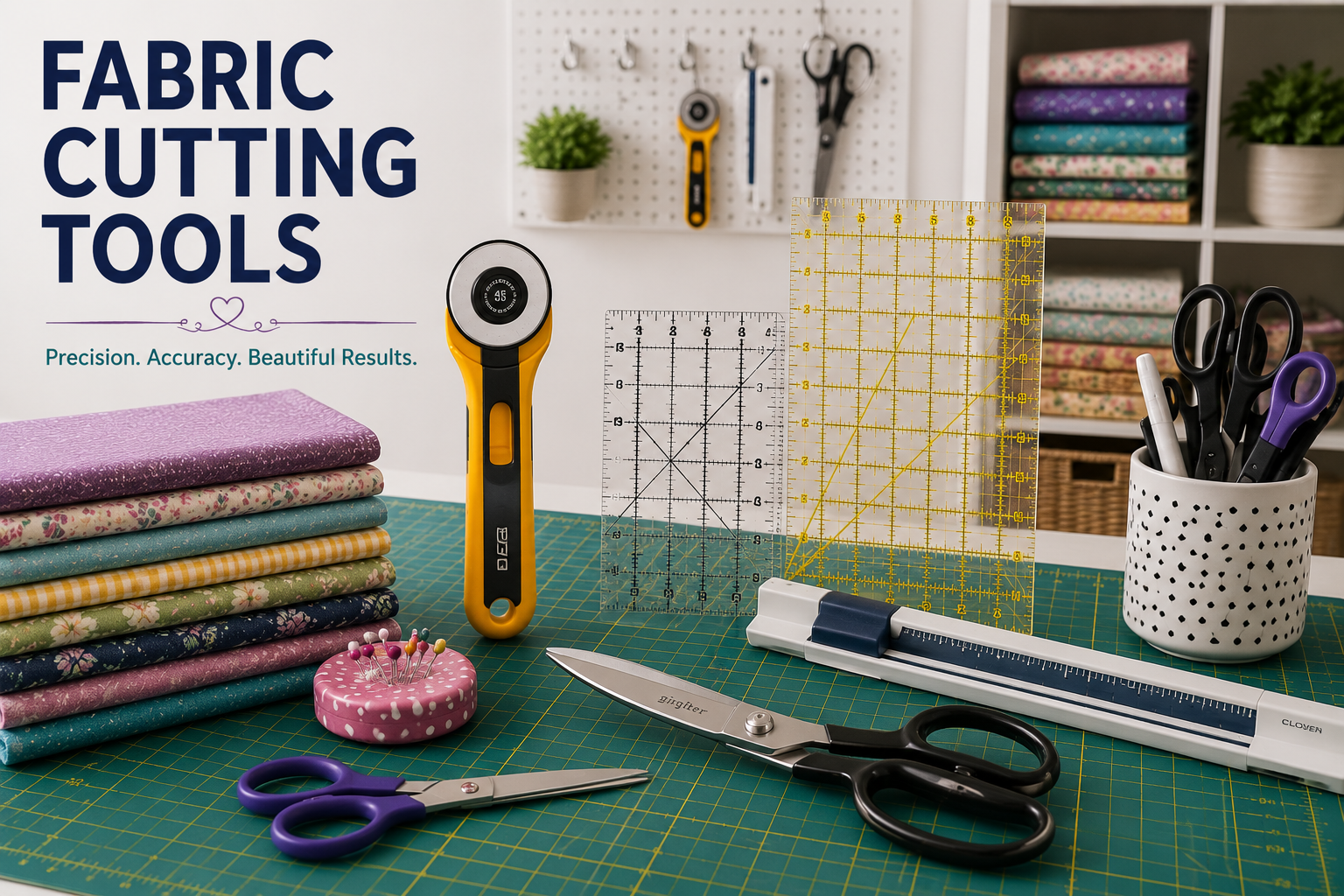
| Best overall fit | OLFA 45 mm rotary cutter | Versatile cutting | The common 45 mm format balances straight cuts and curves. The recommendation is conditional on the project described here, not a universal ranking across every kind of sewing. | Check current offer |
| Best accessible option | Fiskars rotary cutter | Accessible quilting use | Common handle and blade formats support everyday cutting. The recommendation is conditional on the project described here, not a universal ranking across every kind of sewing. | Check current offer |
| Best upgrade | Cricut Maker family | Flexible digital shapes | Electronic cutting supports software-driven shapes. The recommendation is conditional on the project described here, not a universal ranking across every kind of sewing. | Check current offer |
| Best specialist | AccuQuilt GO! system | Repeatable die cuts | Physical dies make repeated quilt shapes consistent. The recommendation is conditional on the project described here, not a universal ranking across every kind of sewing. | Check current offer |
Star icons represent our editorial fit within this guide, not retailer customer-review scores. Product specifications and availability should be verified at the current listing.
OLFA 45 mm rotary cutter
Best for: Versatile cutting
The common 45 mm format balances straight cuts and curves. The recommendation is conditional on the project described here, not a universal ranking across every kind of sewing.
Why consider it
- Matches a distinct use case
- Documented machine family and support
- Clear role in the shortlist
Limitations
Requires mat, ruler and safe handling.
Verify the current manual and configuration before ordering.
Fiskars rotary cutter
Best for: Accessible quilting use
Common handle and blade formats support everyday cutting. The recommendation is conditional on the project described here, not a universal ranking across every kind of sewing.
Why consider it
- Matches a distinct use case
- Documented machine family and support
- Clear role in the shortlist
Limitations
Handedness and grip need checking.
Verify the current manual and configuration before ordering.
Cricut Maker family
Best for: Flexible digital shapes
Electronic cutting supports software-driven shapes. The recommendation is conditional on the project described here, not a universal ranking across every kind of sewing.
Why consider it
- Matches a distinct use case
- Documented machine family and support
- Clear role in the shortlist
Limitations
Mats, blades and software add costs.
Verify the current manual and configuration before ordering.
AccuQuilt GO! system
Best for: Repeatable die cuts
Physical dies make repeated quilt shapes consistent. The recommendation is conditional on the project described here, not a universal ranking across every kind of sewing.
Why consider it
- Matches a distinct use case
- Documented machine family and support
- Clear role in the shortlist
Limitations
New shapes require more dies.
Verify the current manual and configuration before ordering.
How to choose for this exact job
Define the hardest repeated assembly
Count compressed layers at seam intersections, include batting, stabilizer, binding, webbing or piping, and separate an occasional edge case from the material sewn every week. Equipment should be sized for the normal demanding task without pretending a domestic platform is industrial.
Evaluate feeding, not motor language
Even results depend on the feed system, presser-foot pressure, foot choice, needle, thread, seam design and operator control. Marketing claims about power provide less useful evidence than the documented mechanism and intended materials.
Measure the installed workspace
Include extension tables, frame travel, fabric support, rear clearance, chair position, storage access and room to rotate the project. Large fabric becomes difficult when its weight pulls against the needle.
Check the ownership system
Confirm manuals, compatible feet, needles, bobbins, hoops or frames, local service, warranty terms and return policy. A cheaper machine can cost more if the needed accessory or support is unavailable.
Setup matters as much as the machine
Use a new needle whose type and size match the material and thread. Test the complete seam stack on scrap, including stabilizer or batting. Begin at controlled speed, support the project so it does not drag, and cross thick junctions without pulling the fabric. Pulling can deflect the needle and damage the material or machine.
For specialty work, define the workflow before buying accessories. Quilting requires a flat support surface and a plan for fabric movement. Embroidery requires correct stabilizer, hooping and design density. Dense fabric work requires seam planning, suitable thread and realistic layer limits. No accessory converts a mismatched machine into the correct industrial class.
Domestic, specialty or industrial?
A domestic machine is designed for intermittent home use and a broad range of ordinary sewing. A specialty home machine may add straight-stitch speed, embroidery, larger workspace or quilting controls. Industrial machines are usually optimized for a narrower operation, feed system, needle system and sustained duty cycle.
The distinction matters most for leather, canvas and upholstery. Thin or moderate projects can fit a sturdy domestic machine, while thick assemblies, sticky surfaces, long topstitching, piping or repeated production often require walking or compound feed. For quilting, the comparable step is from a stationary domestic machine to a sit-down or frame-based long-arm system.
Common buying mistakes
- Buying the label: “Heavy duty,” “quilting,” “professional” and “beginner” are not standardized capability tests.
- Ignoring the full stack: A machine may sew one fabric layer but fail at folded hems, bindings or seam crossings.
- Overvaluing totals: Stitch and design counts matter less than the controls and capacity used every session.
- Underplanning space: Fabric, frames, hoops and extension tables require more room than the machine body.
- Skipping service research: Downtime, shipping and unavailable accessories can erase a small purchase-price advantage.
- Expecting automation to replace technique: Correct preparation and consumables remain necessary.
Match the machine to real-world use
Occasional repairs
Favor versatility, simple setup and reasonable cost. It is rarely sensible to dedicate permanent space to specialty equipment for a task completed only a few times each year. Rent, use a studio or outsource an unusual project if it exceeds the documented machine range.
Weekly hobby projects
Comfort, low-speed control, table support and convenient accessory changes become more valuable. Upgrade when a feature removes friction from every session and applies directly to the repeated fabric and technique.
Large demanding work
Workspace and feed method move ahead of decorative features. Measure the largest assembly, identify where bulk accumulates and plan how its weight will be supported. A specialized system may be the safer choice.
Paid production
Throughput, repeatability, service and downtime carry financial value. Separate a machine that can complete one sample from equipment designed to repeat the operation. Include training, maintenance and backup capacity.
Verify these details before ordering
Record the exact model number and region because voltage, accessories and warranty coverage can differ. Download the manual and confirm the needle system, bobbin class, foot or hoop compatibility, recommended settings and maintenance instructions. Compare that manual with the retailer listing instead of assuming a photograph shows the complete bundle.
Measure the machine, table, extension surface or frame in operating position—not folded storage dimensions. Leave room for cords, thread, fabric movement and safe access. For embroidery, include room to remove the hoop. For frame quilting, include the operator aisle and carriage travel. For dense fabric, support the work so it cannot pull against the needle.
Identify the seller, return window, restocking conditions, warranty process and realistic service route. Ask whether service requires dealer delivery or shipping and whether routine parts are available. These details rarely lead feature charts, but they determine how expensive a problem becomes.
Calculate the complete working cost
The budget may include a stable table, extension surface, lighting, chair, feet, needles, bobbins, thread, stabilizer, hoops, frame parts, leaders, rulers, storage and electrical preparation. Some are conveniences; others are required to perform the workflow consistently.
Estimate cost per year of actual use instead of chasing the lowest checkout price. A more expensive machine is rational when it solves a repeated bottleneck, receives frequent use and has dependable service. It is poor value when added capacity sits unused or inconvenient setup causes projects to be avoided.
Run a workflow test before committing
Write a sample workflow from material preparation through finishing and cleanup. Mark every point where fabric must be turned, a foot or hoop changed, thread cut, a design transferred or bulk supported. This exposes practical costs that feature lists miss.
If possible, reproduce the hardest step with scrap material at a dealer, class or shared studio. Use the real seam stack, stabilizer or quilt sandwich and work at the speed you expect to use. A controlled trial of the difficult operation is more informative than one easy line on demonstration cotton. When a trial is impossible, compare manuals and return terms carefully and avoid assuming that a broad marketing category guarantees the needed result.
How this guide was researched
We used the existing live article as historical reference, then rebuilt the decision framework around current manufacturer documentation, manuals, accessory compatibility and machine-class limits. Recommendations distinguish documented facts from editorial analysis, avoid invented ratings and do not claim hands-on testing.
Related guides
Frequently asked questions
What matters most when choosing cutting repeated shapes, appliqué, quilts and craft materials?
Start with the repeated project, material range, workspace and frequency. A feature matters only when it improves that actual workflow; labels and feature totals are weak substitutes for fit.
How much should a buyer spend on cutting repeated shapes, appliqué, quilts and craft materials?
Set the budget around the complete working system, including appropriate needles or feet, table support, supplies, maintenance and service. Paying more is rational only when the added control or capacity will be used.
Can a beginner use cutting repeated shapes, appliqué, quilts and craft materials?
Yes, if the controls, setup and support match the learner. Beginners still need to learn threading, material preparation, safe operation and the correct consumables; automation does not remove those fundamentals.
Which specifications are commonly misunderstood for cutting repeated shapes, appliqué, quilts and craft materials?
Speed, stitch totals and marketing categories are often overweighted. Usable workspace, low-speed control, feed method, compatibility and realistic material limits usually predict ownership better.
What accessories should be budgeted with cutting repeated shapes, appliqué, quilts and craft materials?
Budget for project-specific needles, quality thread, the correct presser foot or hoop, stable work support, cleaning supplies and safe storage. Specialty systems may also require frames, leaders, stabilizer or dedicated furniture.
When is an upgrade justified for cutting repeated shapes, appliqué, quilts and craft materials?
Upgrade when a repeated limitation costs time or prevents acceptable results: insufficient workspace, inconsistent feeding, poor slow-speed control, excessive rehooping or inadequate throughput. Upgrade for a documented bottleneck, not novelty.
How should current model claims for cutting repeated shapes, appliqué, quilts and craft materials be verified?
Check the exact model manual and current manufacturer specification page, then confirm the retailer bundle, voltage, warranty and return terms. Similar model names can hide meaningful regional or package differences.
What mistake causes the most disappointing results with cutting repeated shapes, appliqué, quilts and craft materials?
The largest mistake is buying from a category label alone. Define the thickest repeated assembly, largest project and normal duty cycle, then choose equipment whose documented configuration matches all three.
Choose around the repeated work
Compare the current model, bundle and seller after you have defined the material, project size, controls and ownership support you need.
Compare Options on AmazonManufacturer specifications and manuals are used as non-clickable factual references. Purchase-intent links on this page lead to Amazon and may earn an affiliate commission.