
Janome HD1000 vs Janome HD3000
A practical decision guide based on machine class, controls, project fit and total ownership value.
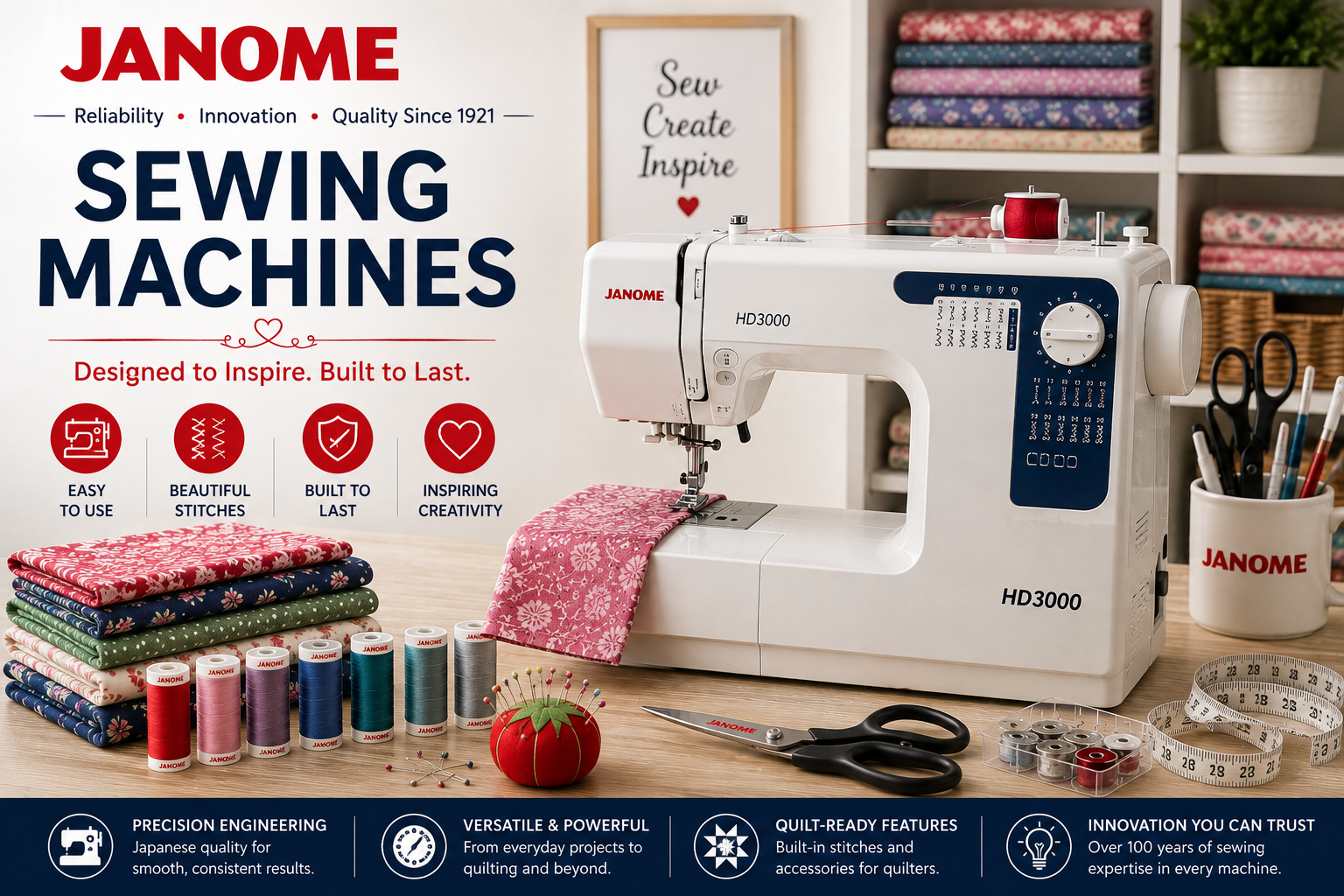
Quick verdict
Choose the Janome HD1000 when straightforward mechanical operation and a lower entry point. Choose the Janome HD3000 when additional control, convenience and a stronger long-term domestic setup. The winning machine is determined by the work, not by an arbitrary overall score.
product image slot
Janome HD1000
The strongest case for the Janome HD1000 is straightforward mechanical operation and a lower entry point. That advantage matters only when it removes friction from projects the buyer actually repeats. Evaluate the real workflow: setup time, low-speed control, fabric support, accessory changes, finishing steps and cleanup. A head
product image slot
Janome HD3000
The Janome HD3000 makes the stronger argument for additional control, convenience and a stronger long-term domestic setup. This is a real advantage when those needs occur often enough to justify the model’s price and learning curve. If the benefit solves only a hypothetical future project, the cheaper or simpler option may be mo
Janome HD1000 vs Janome HD3000: decision table
| Decision | Janome HD1000 | Janome HD3000 |
|---|---|---|
| Best reason to choose | straightforward mechanical operation and a lower entry point | additional control, convenience and a stronger long-term domestic setup |
| Controls | Judge the documented interface and useful automation | Judge the documented interface and useful automation |
| Project fit | Confirm repeated techniques and material stacks | Confirm repeated techniques and material stacks |
| Bundle | Verify current included accessories | Verify current included accessories |
| Ownership | Check service, parts and compatibility | Check service, parts and compatibility |
Where the Janome HD1000 has the advantage
The strongest case for the Janome HD1000 is straightforward mechanical operation and a lower entry point. That advantage matters only when it removes friction from projects the buyer actually repeats. Evaluate the real workflow: setup time, low-speed control, fabric support, accessory changes, finishing steps and cleanup. A headline feature that rarely enters the workflow should carry little weight.
Buyers should also separate machine capability from bundle value. A useful included table, foot, hoop or protective cover can change total cost, while a crowded accessory package can be meaningless if the parts do not match planned techniques. Verify every included item in the exact seller listing.
Where the Janome HD3000 has the advantage
The Janome HD3000 makes the stronger argument for additional control, convenience and a stronger long-term domestic setup. This is a real advantage when those needs occur often enough to justify the model’s price and learning curve. If the benefit solves only a hypothetical future project, the cheaper or simpler option may be more rational.
Workspace and fabric management deserve special attention. Large quilts, embroidery layouts, bulky bags and layered seams expose physical limits that stitch-count comparisons miss. Measure the planned project and identify the densest seam or largest design before deciding.
Controls, learning curve and speed
Janome HD1000
Assess how the start/stop controls, speed regulation, stitch selection, threading references and error recovery fit the user. Familiar controls reduce hesitation, but automation still requires correct needle, thread and setup.
Janome HD3000
Compare the same recurring actions rather than counting menu options. A more advanced interface helps only when it makes real adjustments clearer or faster.
Maximum speed is not the same as useful control. Detail work benefits from predictable slow operation; long straight runs favor sustained pace. Neither specification proves stitch quality across every fabric stack, so test scraps remain mandatory.
Fabric handling and project fit
Fabric labels alone are poor tests. “Denim,” “canvas” and “knit” cover many weights and constructions. The critical challenge is usually the full stack at a hem, intersection, stabilizer layer or bulky transition. Match needle type and size, thread, presser foot, seam preparation and machine class to that stack.
If the recurring work falls outside either model’s intended class, choose different equipment. A domestic heavy-duty label does not create an industrial walking-foot feed system; a decorative sewing alphabet is not machine embroidery; an overcasting stitch is not a serger; and a single-needle embroidery machine is not multi-needle production equipment.
Accessories and hidden ownership cost
Calculate the complete setup: machine, required feet or hoops, bobbins, needles, thread, stabilizer, table support, lighting, storage, maintenance and potential service. Check compatibility by exact model rather than brand alone. Seller bundles and model suffixes can change included accessories.
Warranty coverage and returns matter because comparison pages cannot establish the condition of an individual unit. Prefer a seller with clear terms, inspect the machine promptly and keep packaging until the machine has completed realistic project tests.
Who should buy each model?
Janome HD1000
- Choose it when its specific workflow advantages match your repeated projects.
- Verify current bundle, service and accessory compatibility before buying.
Janome HD3000
- Choose it when its specific workflow advantages match your repeated projects.
- Verify current bundle, service and accessory compatibility before buying.
A five-step buying test
- List the three projects you will make most often.
- Identify the thickest seam, largest work area and most important stitch or design size.
- Compare exact controls and accessories required for those tasks.
- Add omitted tools and supplies to the current purchase price.
- Choose the least expensive complete setup that meets today’s work with reasonable growth room.
This test prevents two common failures: buying the cheaper model and immediately replacing it, or paying for a premium feature set that remains unused.
Decision scenarios that expose the difference
First machine for mixed home sewing
Prioritize predictable controls, an understandable manual, common utility stitches, buttonhole workflow and accessories matching immediate projects. A beginner gains little from a long decorative library if threading, bobbin setup or speed control is confusing. Compare the first ten real projects, not an imagined expert workflow years away.
Quilting or large assemblies
Workspace, table support, needle-position control, presser-foot lift and fabric management can dominate the decision. Measure the folded project and available room around the machine. Fewer decorative features may be the stronger choice when physical workspace and controls reduce wrestling with fabric.
Embroidery and personalization
Separate combination machines from embroidery-only systems, then compare embroidery field, hoop bundle, transfer, editing and file workflow. A larger field reduces rehooping but increases stabilizer use. Buyers selling personalized work should evaluate output time, interruption risk and service—not promise commercial volume from a home single-needle platform.
Garments, knits and edge finishing
A conventional machine remains central for construction, while a serger can speed knit seams and finishing. If comparing sergers, examine threading, differential feed, stitch conversion and knife control. If neither machine forms the required stitch, the correct answer is another equipment class, not a forced winner.
Budget versus growth room
Calculate the complete two-year setup, including feet, hoops, tables, consumables, maintenance and likely upgrades. Paying more is rational when additional capability will be used repeatedly and prevents near-term replacement; otherwise, preserve budget for fabric, instruction and specialized equipment.
Seller bundle and delivery checks
Do not assume two listings for the same model are equivalent. Record the seller, warranty route, return window, voltage, included accessories and whether the machine is new, refurbished or open-box. A small saving can disappear if a required hoop, extension table or specialty foot is missing. Inspect the delivered model number and accessories before discarding packaging.
Run the manual’s setup sequence and test representative scraps while the return window is open. Check feeding, controls, buttonholes or specialty stitches relevant to the machine class and accessory fit. The goal is not a torture test; it is confirmation that the exact unit performs the work that justified the purchase.
How this comparison was researched
Published documentation was compared for machine class, controls, stitch formation, workspace, fabric management, accessories, project fit, service and ownership cost. No numerical scores, unsupported durability claims or hands-on-testing claims were invented. Manufacturer information remains a non-clickable factual source; commercial buttons lead only to Amazon.
Frequently asked questions
Ready to compare the current offers?
Recheck the exact seller bundle, included accessories and return terms before ordering either model.
Which is better, the Janome HD1000 or Janome HD3000?
Neither wins universally. The better choice is the one whose machine class, controls, workspace and bundle match the projects you will repeat.
Are the Janome HD1000 and Janome HD3000 suitable for beginners?
Both may suit beginners, but ease depends on setup, interface preference and project complexity. The manual and available support matter as much as feature count.
Which offers better value?
Value depends on the current complete bundle and useful features, not list price alone. Compare included feet, tables, hoops or tools plus warranty and return terms.
Can either machine handle thick fabric?
Domestic capability depends on the full seam stack, needle, thread, presser foot and preparation. Neither should automatically be treated as industrial equipment.
Which is easier to maintain?
Routine cleaning and needle replacement are manageable on both when the manual is followed. Service access and parts availability should be checked locally.
Should I buy based on stitch count?
No. A larger stitch library is valuable only when those stitches support real projects. Feed control, workspace and predictable operation often matter more.
What should I verify before ordering?
Verify the exact model suffix, voltage, included accessories, warranty coverage, seller identity and return policy. Retail bundles can differ.
Can one replace specialized equipment?
Only within its documented machine class. Conventional machines do not replace sergers or embroidery systems, and home equipment does not become industrial because it can cross an occasional thick seam.
Final decision
Choose the Janome HD1000 for straightforward mechanical operation and a lower entry point; choose the Janome HD3000 for additional control, convenience and a stronger long-term domestic setup. Confirm the exact current configuration before ordering.
Check Current Price